

One way that misinformation and disinformation often gains hold is through photos and other visuals. Accordingly, attempts to debunk misinformation should preferably also use visuals as a corrective.
There is a reason why photos and other visuals work both as a means of misinformation and as a means of countering it — visuals are essentially truth-agnostic, meaning they can boost falsehood and truth equally well. That’s because they make it easier to imagine a particular claim, and the easier it is to imagine something the more likely people are to think that it is true.
This was nicely demonstrated in a 2012 study by Eryn Newman and colleagues.
Photographs and the Inflated Truthiness
Previous studies showed that people are more likely to think that a claim about a target is true if they can easily imagine it. So the researchers thought that photographs, because they provide raw materials for imagery, would likewise inflate the truthiness (the superficial appearance of truth).
In this study, subjects had to rate various statements as true or false. For example, one claim said that John Key, New Zealand’s Prime Minister, is alive.
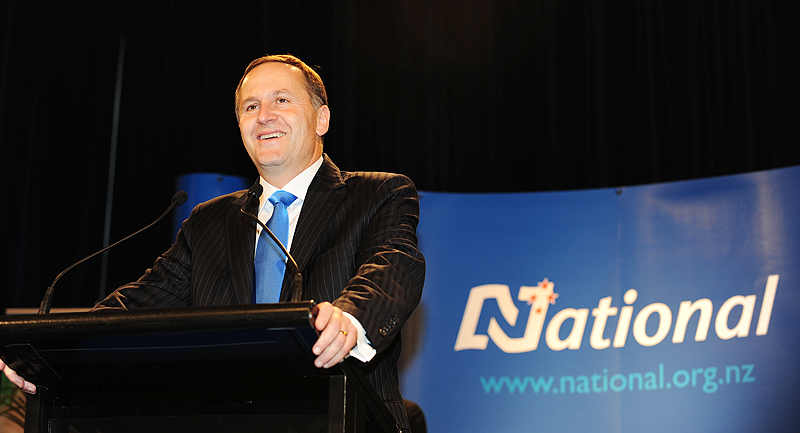
Half of the participants saw this claim without Key’s photo and the other half saw it with the photo.
As expected, those who saw the photo were more likely to say that John Key is alive. No surprise, you might say — seeing someone’s photo might somehow hint that the person is alive.
Yet, the same thing happened when the subjects rated the claim that John Key is dead. His photo made it more likely that people will think he is dead.
So it doesn’t matter what is being said — showing a photo increases chances that it will seem true.
References
Eryn J. Newman, Maryanne Garry, Daniel M. Bernstein, Justin Kantner, and D. Stephen Lindsay. “Non-Probative Photographs (or Words) Inflate Truthiness.” Psychonomic Bulletin & Review, Vol. 19, 969-974 (2012).