
One major mistake we often make when trying to debunk some false ideas or refute outright lies is repeating the falsehood.
The more people are exposed to a certain idea, piece of information, or other stimulus, the more positive attitudes they are likely to develop toward it and be influenced by it, even if it is completely false to begin with.
Zajonc’s Mere Exposure Effect
In the 1960s, psychologist Robert Zajonc noticed that novel stimuli appear threatening, but with each repeated exposure people come to like a particular stimulus more and more.
In his seminal 1968 paper, Zajonc established the mere exposure effect, showing that we come to prefer a particular stimulus increasingly with each exposure.
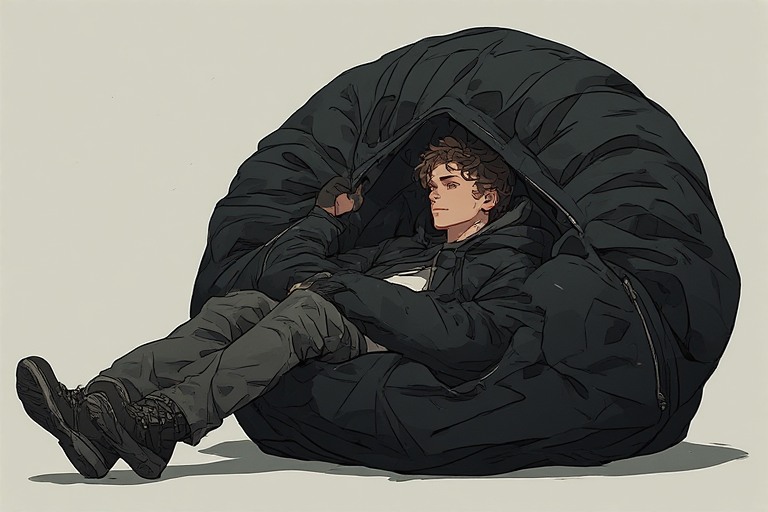
Zajonc began his paper with an excerpt from an Associated Press article about a college student who wore a big black bag:
A mysterious student has been attending a class at Oregon State University for the past two months enveloped in a big black bag. Only his bare feet show. Each Monday, Wednesday, and Friday at 11:00 A.M. the Black Bag sits on a small table near the back of the classroom. The class is Speech 113— basic persuasion … Charles Goetzinger, professor of the class, knows the identity of the person inside. None of the 20 students in the class do. Goetzinger said the students' attitude changed from hostility toward the Black Bag to curiosity and finally to friendship.
Avoidance of Novel Stimuli
The students’ reaction to the Black Big wasn’t unique. Not just humans, but all organisms react with fear and avoidance to any novel stimulus (objects, sounds, or other living beings). A new stimulus may harbor a threat, so it makes sense to be cautious. If nothing bad happens during the first encounter, repeated exposures lead organisms to move from fear and avoidance to approach. Slowly, with each exposure, our liking of that stimulus increases.
For example, when first exposed to a strange sound, the human baby reacts with fear and crying. When the baby hears the same sound for the second time, the baby will show displeasure but won’t cry. On the third exposure, the baby might not show any displeasure. And on the fourth exposure, the baby may show an obvious interest.
Research also shows that the mere exposure effect operates even in the embryonic state. In one study, two sets of fertile chicken eggs were exposed to tones of two different frequencies; when the chickens hatched, they preferred the tone to which they were exposed prenatally (Rajecki, 1974).
Showing the Mere Exposure Effect
To demonstrate the mere exposure effect experimentally, Zajonc asked his subjects to rate the “goodness” of various meaningless stimuli.
For example, subjects were shown various Chinese-like characters, such as these:

Thinking that the characters represented adjectives, subjects had to rate whether they meant something positive or negative. All the characters were meaningless, but some characters were shown more often than others.
As Zajonc predicted, the more frequently subjects saw a character, the more likely they were to judge it as positive.
Zajonc tested the mere exposure effect with other stimuli, including nonsense words (e.g. Iktitaf, Biwojni, Civadra, Kadirga, Enanwal) and photographs of unknown men. The more frequently people encountered a particular stimulus, the more they liked it.
Takeaway
Avoid inadvertently reinforcing falsehoods by repeating them often when attempting to debunk them.
References
Robert B. Zajonc. “Attitudinal Effects Of Mere Exposure.” Journal of Personality and Social Psychology (Monograph Supplement), 9 (No. 2, Pt.2), 1–27 (1968).
D.W. Rajecki. “Effects of Prenatal Exposure to Auditory or Visual Stimulation on Postnatal Distress Vocalizations in Chicks.” Behavioral Biology, 11, 525–536 (1974).