

Reinforcing people’s autonomy is an invaluable approach for overcoming biased thinking, rigid attitudes, and defensiveness.
Whenever people feel that their autonomy is respected and that they are free to do as they want, they are less likely to experience reactance and show resistance.
Conversely, people resist any attempts to change their minds whenever they feel they are being forced to adopt certain views against their will or that their autonomy is constrained in any other way.
Theory of Psychological Reactance
Jack Brehm’s theory of psychological reactance, originally developed in the 1960s, explains that whenever people feel that their autonomy is threatened, they will experience reactance which often leads them to adopt a contrary behavior than the one they are pressured to adopt (Brehm, 1966).
So any feeling that you’re imposing your opinion or will on them may lead people to act in the opposite way, even when it is against their best interest. As the threat to a person’s autonomy increases, so does reactance.
We usually associate reactance with small children and teenagers, when telling them to do one thing almost ensures that they will do the opposite, but reactance knows no age limits.
Reactance Against Health Recommendations
One field that is plagued with reactance is health psychology, where reactance usually arises in response to various health recommendations that seem to encroach on people’s freedoms.
For example, reactance explains why patients often don’t take their medications when ordered to do so, and non-compliance increases with the more extensive, prescriptive, and encroaching treatments (Fogarty & Youngs, 2000).
People with addictive behaviors, like alcohol drinking or tobacco smoking, are particularly likely to exhibit reactance, often without realizing it. For instance, college students who received a high-threat message discouraging alcohol drinking had more intentions to drink compared with those who received a low-threat abstinence recommendation. As typical, reactance was greatest among those whom the message threatened the most — the heavy drinkers (Southwick Bensley & Wu, 1991).
Studies on effectiveness of tobacco warnings also show that warnings provoke reactance; this is especially likely with the graphic warnings, which have become so popular in the recent decade (Erceg-Hurn & Steed, 2011).
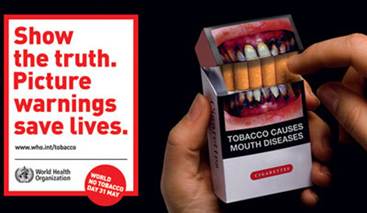
Unfortunately, such public health measures are usually adopted with little consideration of their psychological side effects, and one of their side effects is that heavy smokers, thanks to reactance, may be less motivated to quit.
Manipulative Reverse Psychology
Sometimes reactance can be used as a deliberate and rather unethical tactic, by manipulating people to do something by pretending to be forcing them to do the opposite.
Marketers sometimes use reactance by telling people they cannot buy their product. For example, one of Dr. Pepper’s ads for diet soda claimed that it is “It’s not for woman”, while of course hoping it would encourage women to buy it.
Reinforcing Autonomy and Minimizing Reactance
There are a few practical ways to reinforce people’s autonomy and reduce reactance, such as using questions instead of statements, using positive phrasing, and avoiding controlling language.
Questions
Questions create much less reactance than statements do. For example, a 2012 study tested the effectiveness of various warning labels on cigarette packages (Glock, Müller, and Ritter, 2012).
The study compared graphic warnings, simple textual warnings, and the same textual warnings rephrased as questions. So, for example, a simple textual warning like “Smoking causes fatal lung cancer” was reformulated as a question: “What are the consequences of smoking for your lung?”
Smokers who saw the graphic labels were the least likely to consider smoking risky. Textual labels increased the risk perception, but questions worked best.
Positive Phrasing
It is best to avoid telling people that they cannot do something, because this may encourage just the opposite. (Not only children are tempted by signs like “Don’t push this button” or “Don’t touch”.) It’s best to find ways to express the same idea positively.
In one experiment, a customer service representative had to authorize a bank account before the customer could transfer funds (Dixon and Toman, 2010).
Some customers were told, “you can’t transfer funds until you go through these steps to authorize the account”; others, however, heard the same statement only phrased positively: “let me walk you through these steps to authorize the account.”
The customers rated the service that used positive phrasing as being 82% higher quality and 73% lower effort.
Controlling Language
Controlling language, which uses forceful commands like “must” or “should”, will create much more resistance than non-controlling language which emphasizes choice and uses qualifiers such as “possibly”, “perhaps”, “maybe”, “you might consider”, and so on.
Validating Concerns to Reduce Reactance
If merely reaffirming people’s autonomy is not enough and reactance nevertheless arises, one way to decrease it is to acknowledge it. When people feel that their complaints are understood, their reactance, hostility, and defensiveness decrease and they become more open. Conversely, until people feel that they are understood and validated, they will respond defensively to any suggestions.
One example of such validation comes from a study which used clinical validation to increase persuasiveness of environmental recycling appeals (Werner, Stoll, Birch, White, 2002).
The study compared persuasiveness of the so-called one-sided and two-sided appeals on aluminum-can recycling signs.
- A one-sided appeal stated “No Aluminum Cans Please!!! Use the Recycler Located on the First Floor, Near the Entrance.”
- Two-sided appeal added the acknowledgement: “It May Be Inconvenient, But It Is Important!!!!”
The two-sided appeal was the most effective: recycling reached 80%, doubling the rate of one-sided message.
References
- Jack W. Brehm. “A Theory of Psychological Reactance.” (San Diego, CA: Academic Press, 1966).
- Jeanne S. Fogarty and George A. Youngs, Jr. “Psychological Reactance as a Factor in Patient Noncompliance With Medication Taking: A Field Experiment.” Journal of Applied Social Psychology, 30, 2365-2391 (2000).
- Lillian Southwick Bensley and Rui Wu. “The Role of Psychological Reactance in Drinking Following Alcohol Prevention Messages.” Journal of Applied Social Psychology, 21, 1111-1124 (1991).
- David M. Erceg-Hurn and Lyndall G. Steed. “Does Exposure to Cigarette Health Warnings Elicit Psychological Reactance in Smokers?” Journal of Applied Social Psychology, 41, 219–237 (2011).
- Sabine Glock, Barbara CN Müller, and Simone M. Ritter. “Warning Labels Formulated as Questions Positively Influence Smoking-Related Risk Perception.” Journal of Health Psychology, 18, 252–262 (2012).
- Matt Dixon and Nicholas Toman. “How Call Centers Use Behavioral Economics to Sway Customers.” Harvard Business Review Blog, July 13, 2010, http://blogs.hbr.org/2010/07/how-call-centers-use-behaviora/
- Carol M. Werner, R. Stoll, P. Birch, and P.H. White. “Clinical Validation and Cognitive Elaboration: Signs That Encourage Sustained Recycling.” Basic and Applied Social Psychology, 24, 185-203 (2002).